
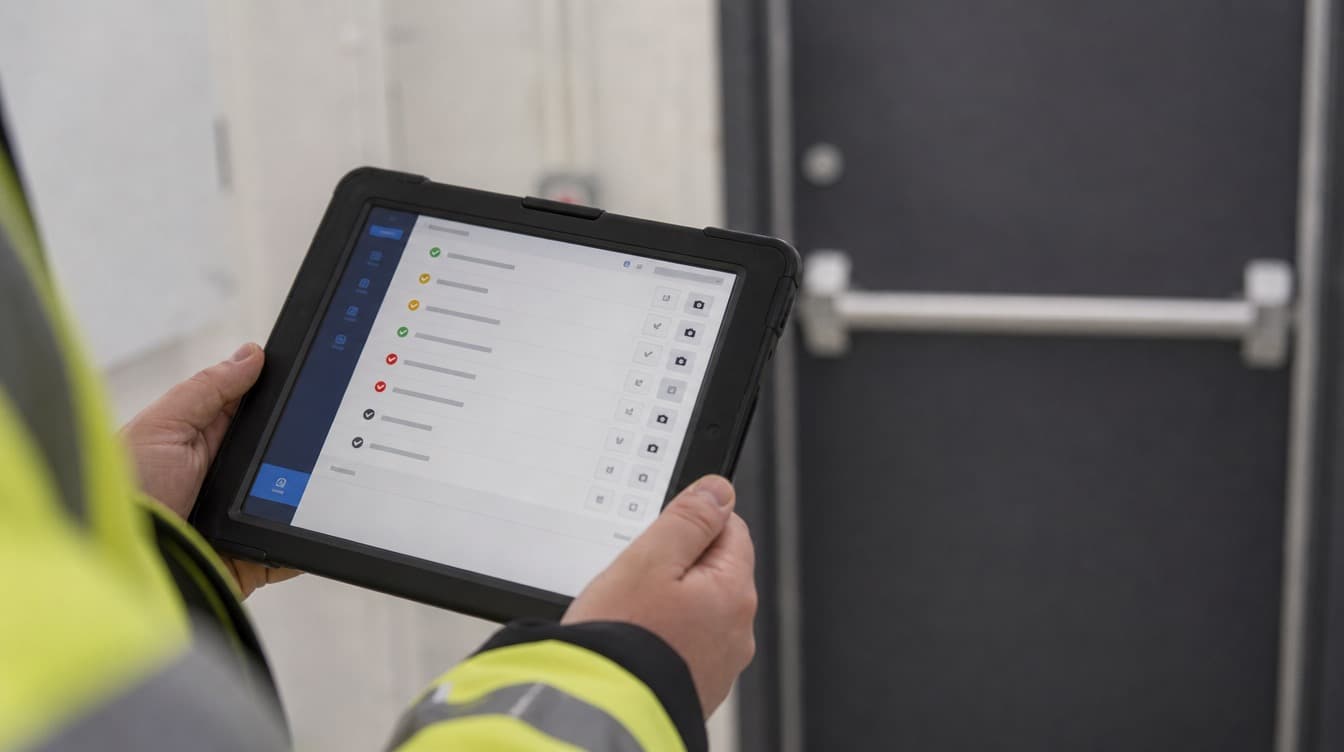
Digital Audit Trails for Fire Safety Documentation
December 28, 2025
Digital audit trails streamline verification, reduce disputes, and give duty‑holders the confidence to stand behind their buildings for decades.
Streamlining Verification Processes with Modern Technology
The days of ring‑binders, photocopied certificates and hand‑written site notes are numbered. As UK fire safety regulations tighten and the “golden thread” of information becomes central to building safety, digital audit trails are rapidly becoming the standard for credible fire safety documentation.
For main contractors, developers and facilities teams, this shift is not just about tidier records. Done well, digital audit trails streamline verification, reduce disputes, and give duty‑holders the confidence to stand behind their buildings for decades.
At DefendX Fire Protection, part of the DefendX Onsite Group, we build digital traceability into every passive fire protection and fire detection project. Here’s how modern technology transforms verification – and what you should expect on your sites.
What Is a Digital Audit Trail in Fire Safety?
A digital audit trail is a complete, time‑stamped record of what has been installed, inspected, maintained and changed in relation to fire safety – held in a secure, searchable system.
A robust digital audit trail will typically capture:
- Exact locations of fire stops, fire doors, encasements, alarms and detectors
- Products and systems used, including ratings and approvals
- Before / during / after photos of critical works
- Installers, inspectors and dates associated with each activity
- Certificates, test reports and O&M data linked to each item
Instead of chasing paper folders, you access a structured history of the building’s fire protection with a few clicks.
Why Digital Audit Trails Now Matter More Than Ever
- Regulatory expectations have risen
- Post‑Grenfell reforms, the Building Safety Act and strengthened guidance place greater emphasis on clear, enduring evidence of fire safety decisions and installations.
- Projects and portfolios are more complex
- Multi‑block schemes, mixed‑use assets and occupied refurbishments demand a level of record‑keeping that paper simply cannot support at scale.
- Insurers and investors want proof
- When assessing risk, underwriters increasingly look for demonstrable control over fire protection – not just promises in method statements.
Digital audit trails give you a defensible position with Building Control, warranty providers, insurers and – crucially – residents and occupiers.
Key Components of an Effective Digital Audit Trail
1. Location-Based Recording
Every fire safety action should be pinned to a precise location:
- Building / block
- Floor and zone
- Room, riser, corridor or stair core
- Unique ID for each penetration, door set, encasement or device
On a well‑managed project, you can open a plan, click on Riser 4, Level 7, and instantly see all fire stops, doors and structural protection associated with that space.
2. Photo-Rich Evidence
Photos remove doubt. A strong audit trail includes:
- Before – showing the opening, services and surrounding structure
- During – capturing installation of seals, boards or fixings
- After – confirming the finished detail and labelling
For fire doors, close‑ups of seals, hinges, closers and thresholds provide clear evidence of compliance at handover – and a benchmark for future inspections.
3. Linked Product & Certification Data
Each digital record should link directly to:
- Product names, batch details and classifications
- Third‑party certification or test reports
- Installation instructions and data sheets
If a product later changes status or new guidance is issued, you can immediately identify where it was used and respond accordingly.
4. Workflow Tracking: Survey → Install → Inspect → Certify
Modern platforms allow you to capture the full lifecycle of each item:
- Surveyed – defect identified, risk assessed, solution proposed
- Installed – work completed with photos and product data
- Inspected – independent verification against design / test data
- Certified – sign‑off and inclusion in handover pack
Every step is time‑stamped and user‑attributed, making responsibilities transparent.
5. Secure Storage & Easy Retrieval
Digital audit trails only add value if they are:
- Securely stored (with appropriate access controls)
- Backed up and portable across the building’s life
- Searchable and filterable by location, date, system or contractor
That’s how you turn compliance from a one‑off event into an ongoing, manageable process.
How Digital Audit Trails Streamline Verification
- Faster Building Control & Client Sign-Off
Instead of walking miles of corridors with incomplete paper records, inspectors can:
- Review digital evidence before or alongside site visits
- Spot‑check representative samples rather than re‑discovering everything
- Quickly verify that high‑risk areas (cores, risers, plant rooms) are complete
This can materially reduce delays at PC and cut down on “please provide more evidence” cycles.
- Clearer Responsibility & Fewer Disputes
With time‑stamped records and named operatives:
- It is obvious who installed what, and when
- Scope creep and “he said / she said” arguments are significantly reduced
- Variations and re‑works can be costed and evidenced more fairly
For main contractors managing multiple subcontractors, this clarity is invaluable.
- Simplified FM Handover and Future Works
For facilities teams, a good digital audit trail:
- Shows exactly what has been installed behind ceilings and within risers
- Helps plan intrusive inspections and refurbishments more safely
- Ensures future contractors understand the fire strategy and existing details before they start cutting holes
This protects the integrity of passive fire protection long after the construction team has left.
- Stronger Defence in the Event of Claims or Incidents
Should an incident, claim or investigation occur:
- You can demonstrate that reasonable steps were taken at each stage
- Decisions are supported by records, not recollections
- Investigators can distinguish between original works and later alterations
In a high‑liability environment, this level of documentation is essential.
Practical Tips for Contractors and Clients
- Choose fire protection partners who work digitally by default. Ask to see sample reports and dashboards.
- Agree data standards early – naming conventions, location coding, photo expectations and required fields.
- Integrate audit trails into your programme, with progressive QA rather than end‑of‑job document chases.
- Ensure handover includes live access, not just static PDFs, so your FM teams can continue building on the record.
How DefendX Fire Protection Delivers Digital Audit Trails
Across fire stopping, fire doors, fire boards and detection systems, DefendX Fire Protection provides:
- Location‑specific digital records for every installation
- Photo‑rich documentation before, during and after works
- Product and certification links for complete traceability
- Structured handover packs aligned to your fire strategy and Building Control needs
We help turn passive fire protection from a compliance risk into a transparent, provable asset – safeguarding lives, assets and reputations.
DefendX Fire Protection – Protecting What You Build, with digital audit trails that make fire safety verification faster, clearer and more robust.